
The Short Answer
There is no magic number. Nobody can promise you traffic at post 10, 30 or 50. Google does not count your posts and hand out visitors when you reach a target.
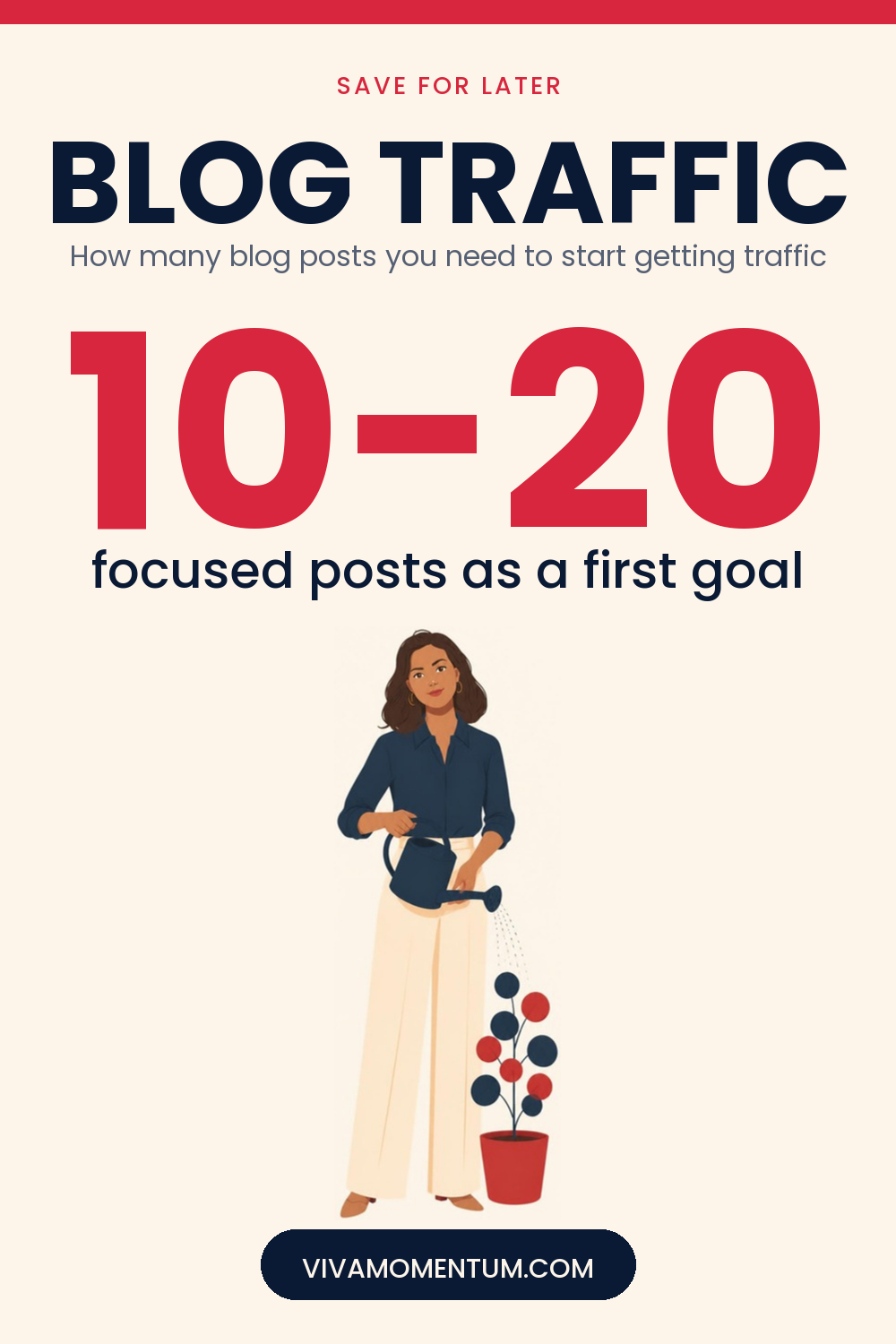
What I can tell you is this: most new blogs need a small, focused set of good posts on one topic, plus several months of patience, before search traffic starts to show. A useful first goal is 10 to 20 helpful posts that all sit around one main topic. That is a starting line, not a finish line. After that, the questions change from “how many?” to “which ones are working, and what do they need next?”
If your blog is brand new and Google seems to be ignoring it, read my guide on how to get traffic to a new website too. This article stays on one question: how many posts it takes.
Why “How Many Posts?” Is the Wrong First Question
I understand why you ask it. When you are new, a number feels safe. “Write 50 posts and traffic comes” sounds like a plan you can follow.
But post count is a result, not a cause. Traffic comes when a post answers a real question that people type into Google, and answers it well. Ten posts like that can bring more visitors than a hundred posts that nobody searches for.
Google says this in its own guide to helpful, people-first content. One of the warning signs it lists is a site “producing lots of content on many different topics” just hoping some of it ranks. It also says plainly that it has no preferred word count. So piling up posts, or padding them to hit a length, is not the trick.
Here is an honest example from my own site. VivaMomentum has well over 100 posts, and its traffic is still small. So a big post count on its own clearly is not enough. That is why every new post here now follows a plan: one topic area at a time, each post linked to the others around it.
Where the Popular Numbers Come From
If you search this question, you will see the same figures again and again: “24 posts”, “50 posts”, “a 77% traffic jump”. I went looking for where they come from. In the articles I read, these numbers were repeated without naming the study, the year or the kind of sites that were measured.
Some of the older figures you will see are about company blogs, which publish many posts a month with a whole team behind them. That is a very different world from one person writing at the kitchen table after work.
So treat any exact number as a rough guess, not a rule. Most writers agree on the shape of it, though:
- A few posts: Google may find and index them, but there is not much for it to understand about your site yet.
- Around 10 to 30 focused posts: your site starts to look like it covers a topic properly. Some posts may begin to show up for small, specific searches.
- Many dozens of posts over a year or more: posts start to support each other through internal links, and traffic tends to grow faster than in the early months.
Notice the words “may” and “tends to”. Your niche, how many other sites cover it, and how good your posts are all change the picture.
What Matters More Than the Count
1. Posts people are searching for
A post can only get search traffic if people search for it. Before you write, check that real people ask the question. Small, specific questions are your friend when you are new, because big sites often skip them. My guide on choosing keywords for a new website shows how to find them without paid tools.
2. Posts that sit together on one topic
Ten posts about ten different things look random. Ten posts that all help one type of reader with one type of problem look like a real resource. This is often called a topic cluster: one main guide, with smaller posts around it that each answer one question. I explain how to plan one in how to create topic clusters for SEO.
3. Posts that link to each other
Internal links help Google find your posts and see how they connect. They also help readers keep going. Every time you publish, link the new post from one or two older posts on the same topic, and link back the other way.
4. Posts that are better than what is already there
Search for your question and read the first few results. Ask yourself: what is missing? A clearer step? An honest downside? A simple example? Your post earns its place by adding that missing piece, not by being longer.
5. Time
This is the part nobody likes. Many bloggers report that the first few months bring very little search traffic, even with good posts. New posts often take weeks or months to settle into their real position in Google. That waiting stage is normal. It does not mean you are doing it wrong.
A Simple Plan for Your First 20 Posts
If you want a number to work towards, use this. It is a plan, not a promise.
- Pick one main topic. Something you can write about for a long time, for one type of reader.
- Write one main guide. This is the big “everything a beginner needs” post for that topic.
- List 15 to 20 small questions your reader asks around that topic. Check that people really search for each one.
- Write one question per post. Answer it near the top, then explain. Keep it clear and honest.
- Link every small post to the main guide, and add links between posts that belong together.
- Publish on a pace you can keep. One or two posts a week for months beats ten posts in one week and then nothing.
- Connect Google Search Console on day one, so you can see when your posts start getting shown in search.
If planning is the part that stops you, my 30-day content plan with AI walks you through it step by step.
How to Tell If Your Posts Are Starting to Work
Do not judge your blog by visitors alone in the first months. Look for earlier signs in Google Search Console:

- Pages indexed: are your posts showing as indexed? If not, Google has not added them yet.
- Impressions: this counts how often your posts were shown in search results. Impressions usually rise before clicks do.
- Queries: which search words are people using when they see you? These often give you ideas for your next posts.
- Average position: a post sitting in position 15 to 30 is close. It may just need a clearer answer or a few more internal links.
When impressions climb but clicks stay low, that is good news in disguise. Google is testing you. Improving the title and the first paragraph of those posts is often a better use of your time than writing a brand-new one.
When to Stop Adding Posts and Fix Old Ones
Once you have a few dozen posts, quick wins often come from posts you already have. Signs a post needs work rather than a new neighbour:
- It gets impressions but almost no clicks.
- It has slipped down over a few months.
- The facts, prices or screenshots are out of date.
- It answers the question late, after a long intro.
My guide on updating old blog posts for more traffic shows what to change and what to leave alone.
Common Mistakes That Make the Number Feel Endless
- Writing on too many topics. Google and readers cannot tell what your site is for.
- Choosing questions nobody searches. Lovely posts, zero searches, zero traffic.
- Copying what is already on page one. If your post adds nothing new, there is no reason to rank it.
- Publishing in bursts, then stopping. A steady pace is easier for you, and it builds over time.
- Quitting at month three. Many blogs give up right before their posts would have started to show up.
- Relying on Google alone. Pinterest, an email list or social media can bring readers while you wait for search.
What About Using AI to Write More Posts Faster?
AI can help you plan, outline and draft faster. That is useful. But more posts written faster does not fix the real problem if the posts are thin. Google’s own guidance warns against mass-producing content mainly to attract search visits, no matter how it is made.
Use AI to get to a good draft sooner, then add what only you can add: your example, your opinion, your honest “this part is hard”. That is what makes a post worth ranking.
Frequently Asked Questions
How many posts should I have before I launch my blog?
You do not need many. Some bloggers like to launch with 5 to 10 posts so a new visitor has something to read. That is about readers, not Google. You can launch with fewer and keep adding.
How long does it take a new blog to get traffic from Google?
It varies a lot. Many bloggers say the first months are very quiet, and that search traffic starts to build somewhere between several months and a year in. Anyone who gives you an exact date is guessing.
Is it better to post often or to write longer posts?
Neither on its own. Post as often as you can keep up with good work, and make each post as long as it needs to be to answer the question fully. Google says it has no preferred word count.
My blog has lots of posts and still no traffic. What now?
Check three things: are your posts indexed, do people actually search for the topics, and do your posts sit together on one subject? Fixing those usually helps more than writing another batch.
The Bottom Line
Stop counting posts and start counting useful answers. Aim for 10 to 20 focused, helpful posts on one topic as your first milestone, link them together, watch Search Console, and give it months, not weeks. The number that matters is not how many posts you have. It is how many of them answer something real.
You are not behind. You are building. Keep going.
If you want company while you build, my free weekly newsletter shares what I am testing on my own sites, step by step.
Rather have it set up for you? See how I set up website traffic for clients.
You Might Also Like
- SEO for Beginners
- How to Build Internal Links for SEO
- How to Create Topic Clusters for SEO
- How to Choose Keywords for a New Website
- How Long Does Pinterest Traffic Take to Grow?
- How to Make Money With a Blog
Discover more from VivaMomentum
Subscribe to get the latest posts sent to your email.