Most new websites fail in a way that has nothing to do with writing ability. They fail because they were built as a pile of articles rather than as a structure, and by the time that becomes obvious there are eighty posts to reorganise and nobody wants to do it.
I have made this mistake at scale. One of my sites has over four thousand articles and more than sixty categories, many of which are different names for the same thing. It still earns, but untangling it is a job I created for myself years ago by not deciding anything at the start.
So this page is the build I would do now, in order, over about ninety days. AI is involved throughout, but the structure is what actually matters.
Days 1–7: Decide the niche, properly
A niche is not a subject. It is a subject plus a person.
“Gardening” is a subject. “Container gardening for people with balconies” is a niche, because you can picture who is reading. That picture is what lets you choose between two article ideas later, which you will do hundreds of times.
Three tests before you commit:
- Could you write fifty articles about it? Not “would you enjoy” — could you. Write the fifty titles now. If you stall at twenty, the niche is too narrow.
- Is somebody already earning from it? Competition is proof of money. A subject with no competitors usually has no audience.
- Can a new site realistically rank? Search five of your fifty titles. If the first page is all major brands, pick differently.
AI is useful here for generating the fifty titles and for pointing out sub-angles you had not considered. It is not useful for picking — ask it for profitable niches and it hands you the same overcrowded list it hands everyone.
Next step: How to Choose a Profitable Blog Niche.
Days 8–14: Build the structure before the content
This is the step that separates a site that compounds from one that sprawls, and it takes an afternoon.

Decide your categories now — four to six, no more. They should be the four to six things your reader wants, not an inventory of everything you might write. One of the sites I benchmark against runs on exactly four categories and out-earns sites twenty times messier.
Then, for each category, decide the one big article that will eventually sit at the top of it — the pillar — and the eight to ten supporting articles that will link up into it. You are designing a library, not a blog.
Write this down as a simple map. It will change, and it will still save you a year.
Next step: How to Create Topic Clusters for SEO.
Days 15–21: Set the site up, then stop touching it
Get a domain, get hosting, install WordPress, pick a fast theme, install an SEO plugin. That is genuinely it.
The trap here is comfortable procrastination. Choosing fonts feels like progress and is not. Nobody has ever failed because of their theme. Give it a week, make it clean and quick, and do not open the design settings again for three months.
Two things worth getting right at the start because they are painful later: a sensible permalink structure, and analytics installed from day one so you have history when you eventually want it.
Days 22–75: The first twenty articles
Here is where most advice goes wrong. It tells you to publish constantly. The better instruction is to publish connectedly.
Twenty articles that link into four pillars will outperform fifty scattered ones. Connection is what tells a search engine you cover a subject rather than dabble in it.
The order I would use: take your strongest category first and build it out completely — the pillar plus its eight supporting articles — before starting the second. Finishing one cluster beats half-building four.
Pace. Two to three articles a week is plenty. It is also, for a brand-new site, considerably safer than publishing forty in a fortnight because AI made it possible. A new domain that suddenly produces content at industrial speed is a recognisable pattern, and not a flattering one.
Where AI belongs in each article. Research the questions, build the outline, draft the sections you already understand, then add the specifics only you have. The last part is not optional — it is the entire reason anyone would read yours instead of the forty other versions.
Next step: The Complete AI Content Workflow for Bloggers.
Days 76–90: Link it together and look at the numbers
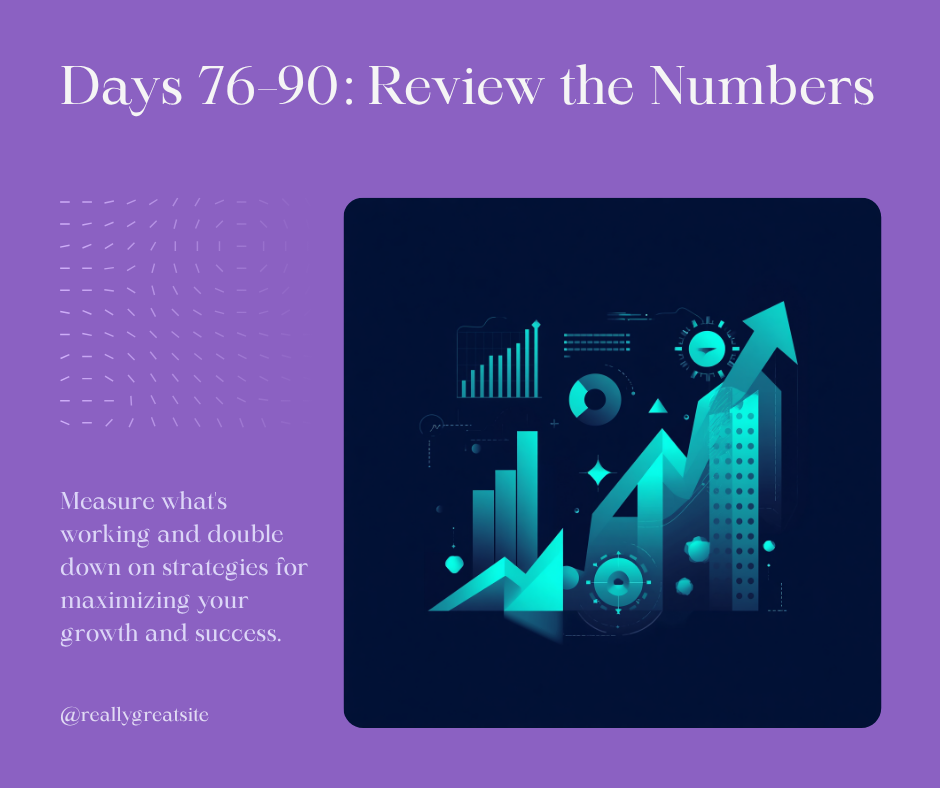
Now go back through everything and link it properly. Every supporting article points up to its pillar. Every pillar points down to its supporting articles. Related articles across categories link sideways where it genuinely helps the reader.
This is the highest-return hour in the entire ninety days and almost nobody does it, because it produces nothing new to look at.
Then open analytics and ask four questions: which pages got any traffic at all, which search terms brought them, which articles did nothing, and what surprised you. At this stage the numbers are small and that is fine. You are looking for direction, not volume.
What you should not do in the first 90 days
Do not apply to ad networks. You will not have the traffic, and rejection creates a waiting period. Build first.
Do not redesign. If traffic is low it is not because of your colours.
Do not start four sites. The most common way beginners lose a year is by starting a second site in month two because the first one is not working yet. Nothing works in month two.
Do not publish anything you have not read. Every single article, read once, out loud if you can bear it. This one rule prevents most of the damage AI can do to a young site.
What to expect, honestly
Little or no search traffic for several months. That is normal and it is not a sign you have done something wrong — new sites simply wait. This is exactly why distribution sits where it does in the system: Pinterest can bring visitors to a site Google has not yet noticed, and those early visitors are what keep you publishing through the quiet period.
Meaningful income arrives later still, usually well after meaningful traffic. The sequence is always the same: structure, then content, then traffic, then money. Every attempt to reverse it costs time.
Where to go next
The Content-to-Income System is the ten-step order this build sits inside. How to Use AI to Build an Online Business covers what AI should and should not touch along the way.
When your first cluster is finished and you want visitors, go to How to Get Traffic to a New Website — which is the honest version of what happens after you press publish and nothing does.
Keep reading
More in this topic:
- How to Choose a Profitable Blog Niche: A Step-by-Step Guide for Beginners
- How to Start a Content Website
- How to Update Old Blog Posts for More Traffic
- 6 AI Niches for Beginners to Earn Money in 2026
Get the next build in your inbox
How I actually grow content sites, one practical email at a time. Sign up and get my free guide, Claude in Production. Just want the Starter Kit? Download it here, no sign-up needed.
Discover more from VivaMomentum
Subscribe to get the latest posts sent to your email.