You got into an affiliate program. Maybe two. Now you are staring at a long list of products, and every single one says it pays you. So which ones do you actually put in your posts?
This is where a lot of new bloggers get stuck. Some freeze and pick nothing. Others pick whatever pays the most and wonder why nobody clicks. The good news: choosing products is not magic. It is a short list of questions you ask before you add a link. In this guide I will walk you through those questions, one by one, in plain words.
Brand new to all of this? Read my beginner guide on how to start affiliate marketing first. It explains the basics, so this page will make more sense.
The short answer
Pick products your readers already need, that you can explain honestly, from companies that treat buyers well. Then check the boring stuff: how much you earn, how long the cookie lasts, and whether people ask for refunds. Commission comes last, not first. That is really it. The rest of this article shows you how to check each part.
Why the product you pick matters so much
When you add an affiliate link, you are lending your name to that product. Your reader trusts you a little. If they buy and it is great, they trust you more. If they buy and it is junk, they remember who sent them.
That is why “what pays the most?” is the wrong first question. A product that pays a big cut but disappoints people can cost you more than it earns. You lose the reader, and often you lose the sale anyway when they ask for a refund.
A product that pays a small cut but solves a real problem keeps working for you. People click, buy, are happy, and come back to read your next post. Over months, that adds up.
Question 1: Does my reader actually need this?
Start with your reader, not the product. Look at the post you are writing and ask: what is this person trying to do? What would help them get there faster, or with less stress?
Here is a simple test. Imagine a friend asked you the same question your post answers. Would you naturally say “oh, you should get this”? If yes, it is a good fit. If you would have to force it in, skip it.
- Good fit: a post on starting a crochet hobby that links a beginner hook set.
- Good fit: a post on starting a blog that links a web host.
- Poor fit: a post on budget meal planning that links an expensive stand mixer “just because it pays well.”
Your niche shapes this a lot. If you are still deciding what your blog is about, my guide to good niches for affiliate marketing can help you see which topics have useful products to recommend.
Question 2: Can I explain it honestly?
Products you have used yourself are much easier to write about well. You know the good parts. You know the annoying parts. You can tell a reader who it suits and who should skip it.
You do not have to own every product you mention. But if you have not used it, be clear about that. Say where your information comes from: the company’s own page, reviews from real buyers, or forums where owners talk. Readers can tell when a review is made up, and they do not come back.
A quick way to check yourself: can you name one real weak spot of this product? If you cannot think of a single downside, you probably do not know it well enough yet to recommend it.
Question 3: What do real buyers say?
Before you link anything, spend ten minutes reading what owners say. Not the reviews on the company’s own sales page. Look further:
- Reddit. Search the product name plus “reddit” in Google. Owners there are often blunt.
- Trustpilot and similar sites. Read the one-star and two-star reviews. Are the complaints about small things, or about the company ignoring people?
- Store reviews. On big stores, sort by “most recent.” A product can change over time, and old praise may not match what ships today.
- YouTube comments. Under review videos, buyers often share what went wrong after a few months.
You are looking for patterns. One angry review means little. Twenty people saying “it broke after a month” or “I could not cancel” is a red flag. Walk away from that one.
Question 4: How does the company treat buyers?
When your reader buys, they are now that company’s customer. If the company is rude, slow or tricky, your reader feels it, and some of that lands on you.
Check a few simple things on the company’s own website:
- Is there a clear refund or return policy you can find in under a minute?
- Is there a real way to contact them, like an email or a help page?
- If it is a subscription, does it say plainly how to cancel?
- Does the sales page make wild promises, like “make $10,000 in a week”? That is a warning sign, not a selling point.
Pushy sales pages tend to bring lots of refunds. And refunds usually mean your commission is taken back.
Question 5: How much will I really earn per sale?
Now, and only now, look at the money. But look at it the right way. A big percentage does not always mean a big payout. Think about these together:
- Price times percentage. A high cut of a cheap item can pay less than a small cut of a pricier one. Do the quick sum.
- One-time or recurring. Some programs, often for software or memberships, pay you every month the customer stays. Others pay once.
- Payout rules. Many programs only pay once you reach a minimum balance, and some hold your money for a while in case of refunds. Read this part of the terms.
Commission rates change often, so I am not going to list numbers here that might be wrong next month. Always check the program’s own terms page before you decide, and check again every so often.
Some networks also show you data. For example, the ClickBank marketplace lists numbers like average earnings per conversion, conversion rate, earnings per click and a “gravity” score. ClickBank’s help page on marketplace stats explains that gravity reflects how many affiliates earned a commission on an offer in the past 90 days. They also note a higher gravity can mean more competition. So treat these numbers as hints, not promises.
Question 6: How long does the cookie last?
A cookie is how the company knows a sale came from your link. The cookie window is how long you get credit after someone clicks.
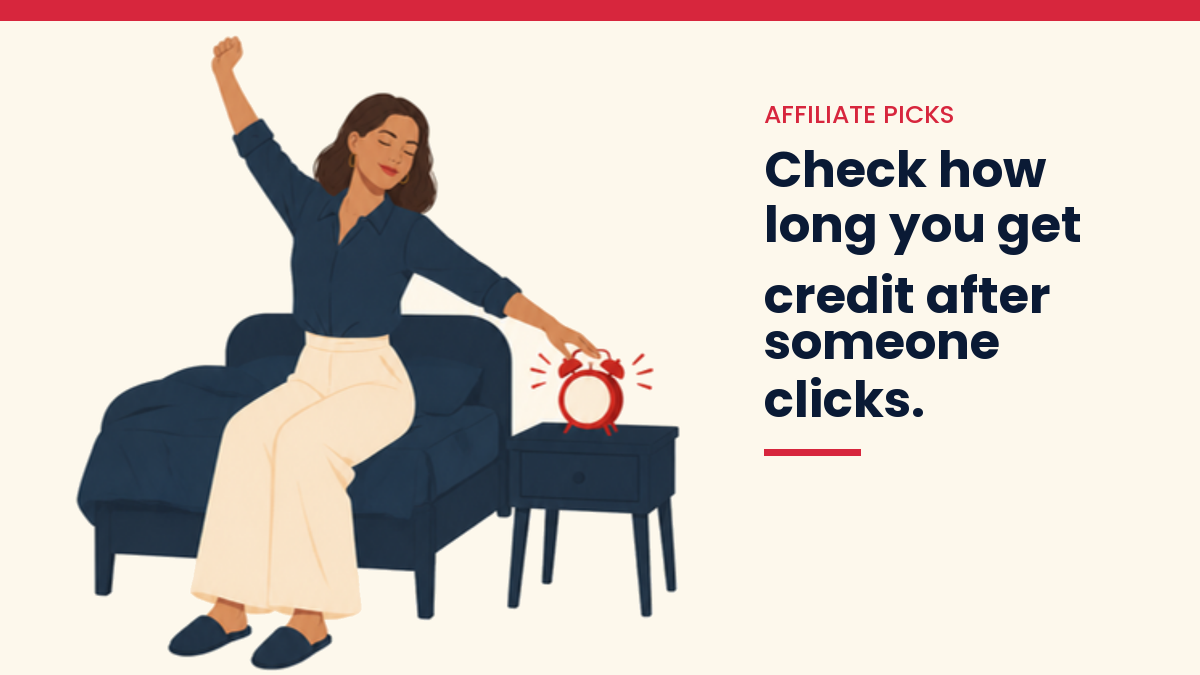
This matters more than most beginners think. Some programs give you weeks. Others give you very little time. Amazon’s own Associates policies, for example, describe a session that ends 24 hours after the click (or sooner, in some cases). So if your reader clicks today and buys next week, you may not get anything.
A short window is not a deal-breaker. It just suits quick, everyday purchases better than big, slow decisions. For a pricey item people think about for weeks, a longer cookie can help. I explain this in more detail in what cookie duration is and why it matters.
Question 7: Will this still be around next year?
Your blog posts can bring visitors for years. So it helps if the products in them last too. Every time a product disappears, you have a dead link and a post to fix.
Things that tend to last: well-known brands, basic tools, and products people buy again and again. Things that come and go: trendy gadgets, brand-new apps with no track record, and “launch special” offers.
You can still mention new things. Just know you will need to check those links more often. Even whole affiliate networks change. ShareASale, for example, moved its programs over to Awin in 2025, so a lot of old guides now point to a platform that no longer works the way they describe.
A simple scoring sheet you can copy
If you want to compare a few options, a simple table on paper helps. Give each product a score from 1 to 3 for each question. Then add them up.
| Question | 1 point | 3 points |
|---|---|---|
| Reader needs it | I would have to force it in | I would tell a friend |
| Can explain honestly | I only know the sales page | I know its weak spots |
| Real buyer reviews | Same complaint again and again | Mostly happy, small gripes |
| Company treats buyers well | Hard to find refunds or contact | Clear policy, easy to cancel |
| Real earnings per sale | Tiny after the math | Worth it for the effort |
| Cookie window | Very short for a slow decision | Fits how people buy it |
| Will last | Brand new or trendy | Around for years |
Notice that money is only one row out of seven. A product that scores high on the first four rows is usually worth keeping, even if the commission is modest.
Common beginner mistakes
- Choosing by commission alone. It feels smart, but readers can tell when a link is there for you and not for them.
- Linking too many things in one post. Ten options can leave a reader stuck. Two or three clear picks, with who each one suits, are often more helpful.
- Hiding the downsides. Saying “this one is not great for left-handed crocheters” builds trust. It does not scare people off.
- Never checking old links. Products change, prices change, programs close. Set a reminder to look over your top posts every few months.
- Forgetting to tell readers. In many places, including under the US FTC’s rules, you need to say clearly that you may earn from a link, close to the link itself. A short, friendly note is enough.
Where to find products to check in the first place
If you do not have any programs yet, start with the brands you already use and look for an “Affiliates” or “Partners” link at the bottom of their website. You can also browse a starter list like my 15 affiliate programs for beginners. My guide on how to find affiliate programs for your blog shows seven more ways to find them. Then run each one through the seven questions above before you add a single link.
Want a helper for the research part? You can ask an AI chat tool to summarise buyer complaints or list a product’s features. Just double-check what it tells you on the real pages. My guide on how to use ChatGPT for affiliate marketing shows how to do that without trusting made-up facts.
Your next step
Pick one post you have already written. Look at it and ask: is there one product here that my reader would really thank me for? Run it through the seven questions. If it passes, add the link with a short, honest note. If it does not, leave the post as it is. That is fine too.
One good product, explained honestly, will do more for you than a page full of links. Start small. You can always add more later.
If you want one short email a week with practical blogging and AI steps like this, join my free weekly newsletter.
Frequently asked questions
Should I only promote products I have used?
It makes honest writing much simpler, but it is not the only way. If you have not used something, say so, and base what you write on real buyer reviews and the company’s own details.
Is a high commission a good sign?
Not by itself. Some products pay a lot because they are hard to sell or get many refunds. Look at reviews and the refund policy before you get excited about the rate.
How many products should I link in one post?
There is no fixed rule. For most beginner posts, one to three well-explained picks are easier for readers than a long list.
What if a product I recommended gets worse?
Update the post. Swap the link for something better, or add a note about what changed. Readers respect a blogger who keeps things current.
You Might Also Like
- How to Make Money With a Blog: The Three Routes and When to Use Each
- Is Pinterest Good for Affiliate Marketing? What to Expect
- How to Get Traffic to a New Website When Google Is Ignoring You
- How to Choose a Profitable Blog Niche: A Step-by-Step Guide for Beginners
- On-Page SEO Checklist for Bloggers
- How to Humanize AI-Generated Content (So It Sounds Like You)
Discover more from VivaMomentum
Subscribe to get the latest posts sent to your email.